
Syllabics





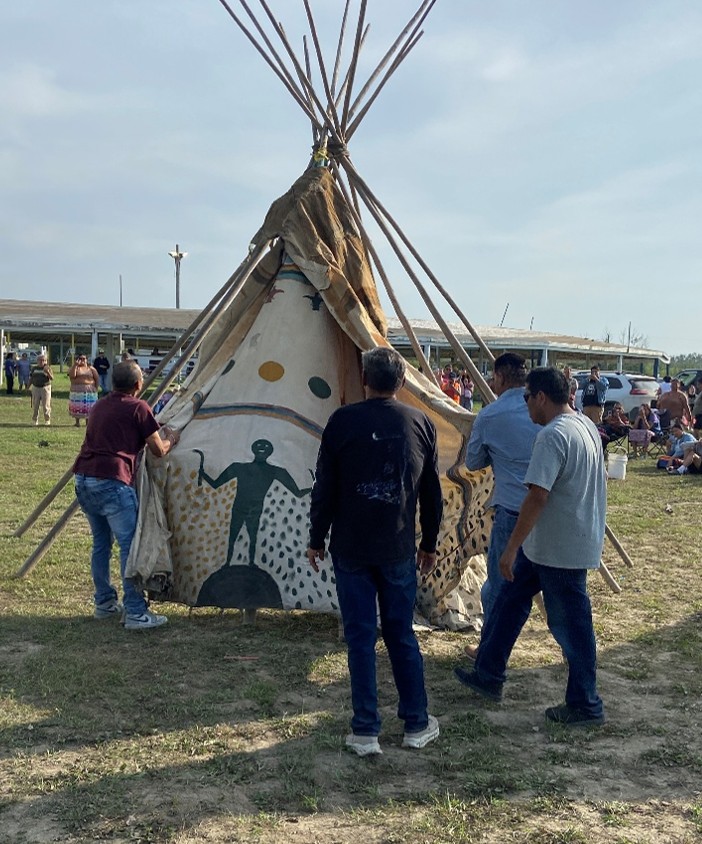
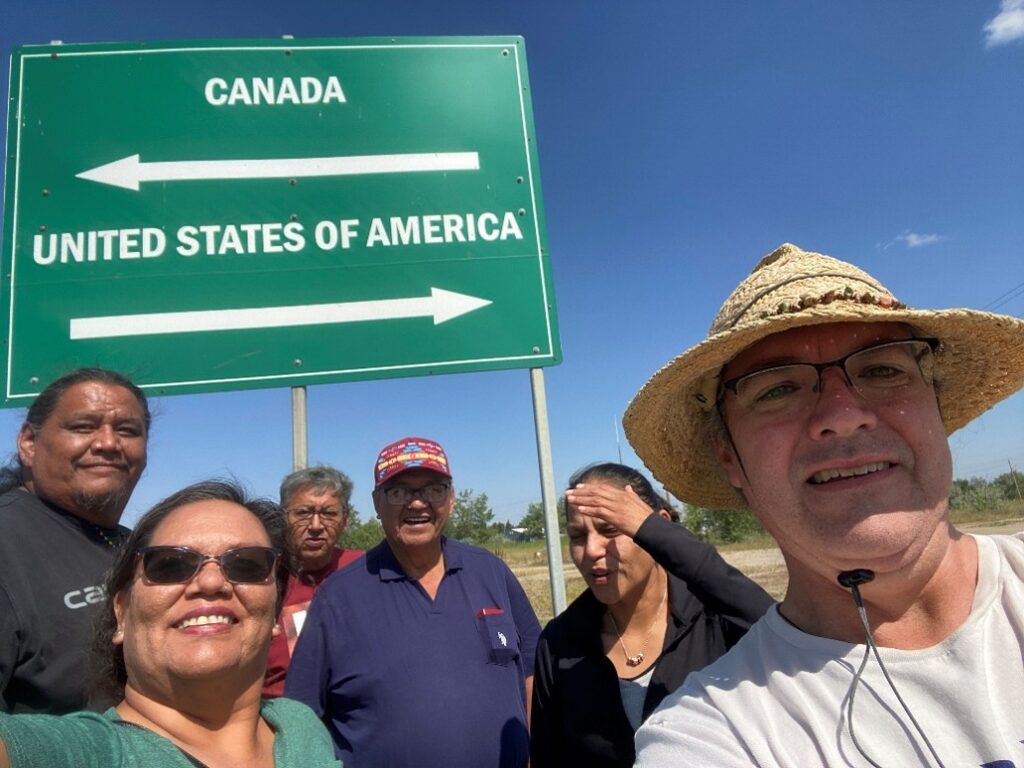
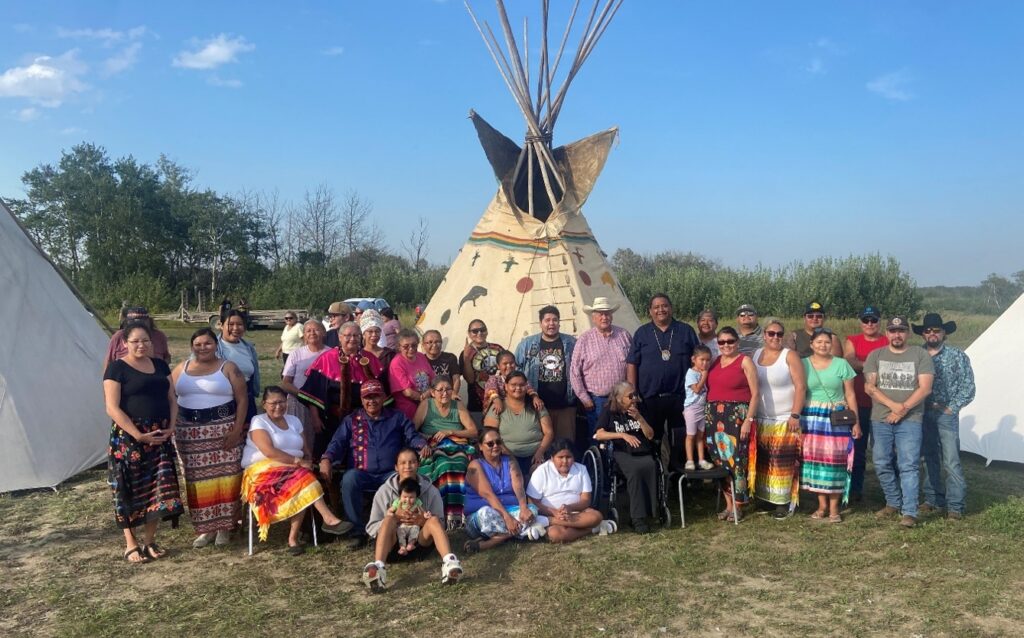
From August 21st to 28th, 2026, Chief Cory Dustyhorn and four members of Kawacatoose First Nation, accompanied by Dr. Andrew Miller (Associate Professor, FNUniv, Indigenous Studies), made the seven-day return trip to the National Museum of the American Indian (NMAI) in Washington, DC, to recover a sacred painted tipi cover taken from their community 100 years ago this September.
In 1926, a freelance museum collector arrived at the Treaty Four celebration in Fort Qu’Appelle and purchased many items from “File Hills Indian Bands” (then known as Peepeekeesis, Little Black Bear, Okanese, and Starblanket First Nations). Among the attendees was sîsîpêskwan, Dustyhorn, a medicine man from Poorman’s First Nation. Although the museum collector recorded that he paid for the tipi cover in his report to the Smithsonian Museum, the ancestors of sîsîpêskwan state that he was never paid – that the tipi cover was stolen. Years later, ethnographer David Mandelbaum recorded that Pimotat from File Hills made the same complaint: the collector who came in 1926 never paid for the things he took.
In the early 20th century, First Nations people in Saskatchewan were under the control of Indian Agents. The illegal Pass and Permit system controlled the wages, employment, and products that could be sold by First Nations members. The Indian Act criminalized Indigenous spiritual practices and Catholic and Protestant churches, and settler society looked down on Indigenous practices as barbarous. Indian Agents further facilitated museum collectors’ access to Indigenous community members who still held family heirlooms. Museum officials gave instructions to collectors that stealing cultural belongings was acceptable to preserve for all time the last vestiges of the “vanishing Indian”.
In 2021, Dr. Miller came across an image of the painted tipi cover made by sîsîpêskwan in the Smithsonian’s NMAI. Knowing members of the Dustyhorn family, Dr. Miller reached out and asked what they wanted to do. At the time, Chief Dustyhorn was a Councillor; he consulted his relatives, and they all agreed: “Get it back!” Together, Councillor Dustyhorn and Dr. Miller approached NMAI to request a meeting to discuss the process for repatriating the tipi cover. A formal request was made. A genealogy was presented identifying that Cory was the rightful descendant of sîsîpêskwan’s eldest son. Cory also delivered the oral tradition that he had received from his ancestors describing the man who took the tipi cover – which the NMAI confirmed as matching the collector who visited the community in 1926. After more than two years, in June 2026, NMAI received approval from its board of governors to return the tipi cover to Cory Dustyhorn.
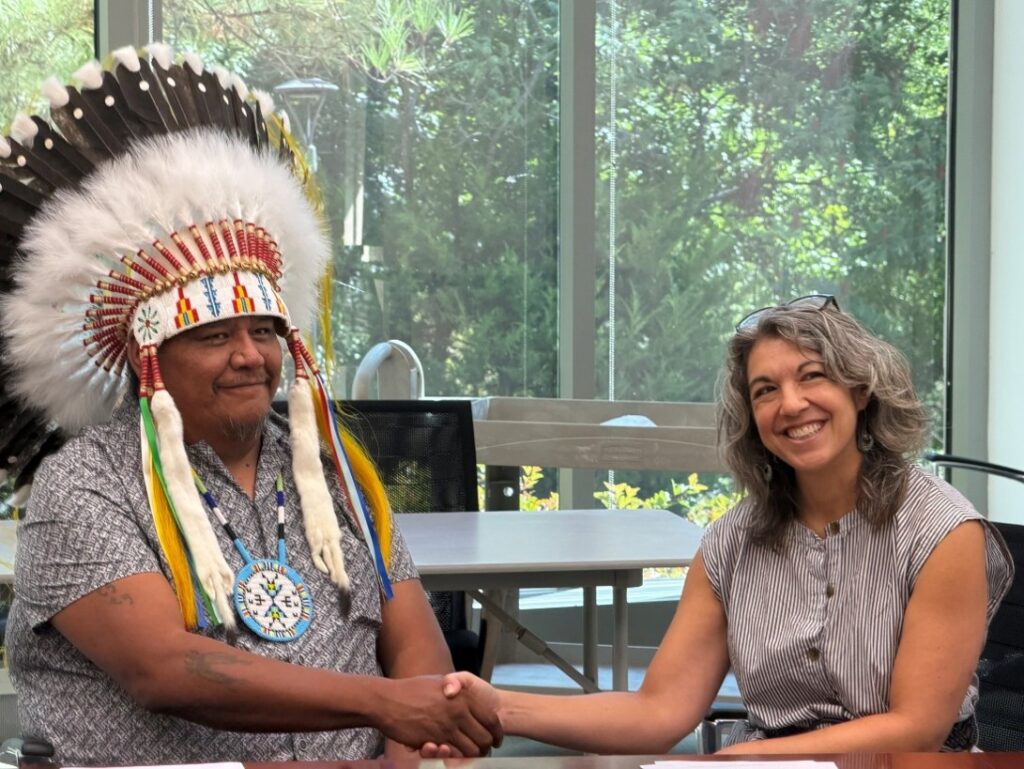
It was a very emotional drive to retrieve the tipi cover. Throughout the trip, NMAI staff, who had become friends with the group during the application to return the tipi cover on ethical grounds, kept track of us. After three days of travel, the group arrived in DC, and the following day, met with the NMAI staff of eight young women who had been involved in the repatriation – conducting chemical analysis to test for toxins (the tipi cover did contain traces of lead paint and naphthalene – mothballs that would make handling it something to be done with caution!), archivists, and conservators who assured us the canvas tipi remained strong enough to be set up. Following a brief examination of the carefully packed tipi cover, the Director of Collections, Rachel Shabica, and Chief Cory Dustyhorn signed a transfer of title – and the tipi returned to Kawacatoose community possession.
During the return trip, Chief Dustyhorn communicated with his people, who prepared to greet the group with Dog Soldier Dancers and a feast of elk, berries, and bannock – food very much like what would have been served during the 1920’s when it was made and consumed by Kawacatoose members.
The loss of the tipi cover represented more than just the loss of art or a ceremonial item. The loss of cultural patrimony during the early 20th century, when Indigenous spirituality was criminalized, was an assault on Indigenous pride, identity, language, spiritual practice, and relationship with creation. We are now entering a new era where many museums are interested in making up for past harms they were a part of committing against Indigenous people. For now, the tipi cover will be stored at the Royal Saskatchewan Museum, but eventually a home will be built for it in Kawacatoose First Nation. We hope this act of reconciliation can contribute, in some small way, to community healing, spiritual growth, and pride.
It has been a pleasure and a privilege to be a part of this work. ki-nanâskomitin êkosi
Submitted by: Dr. Andrew Miller, Associate Professor


For campus locations, maps and hours of operation, please visit our contact us page.
 (the good path through life)
(the good path through life)
(the good path through life)