
Syllabics





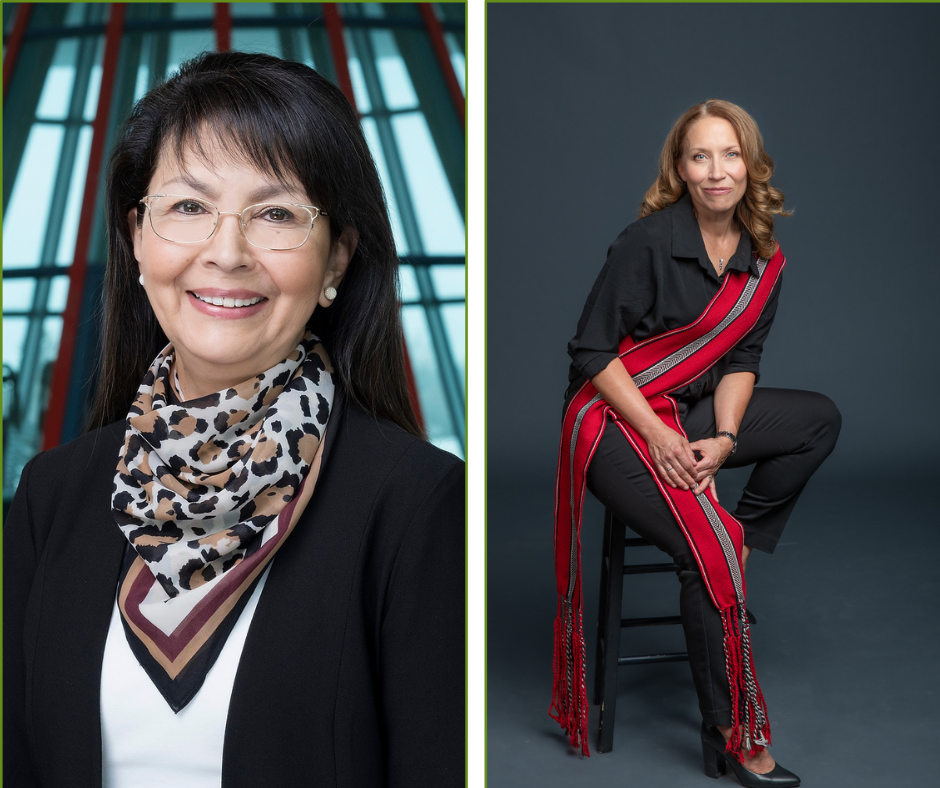
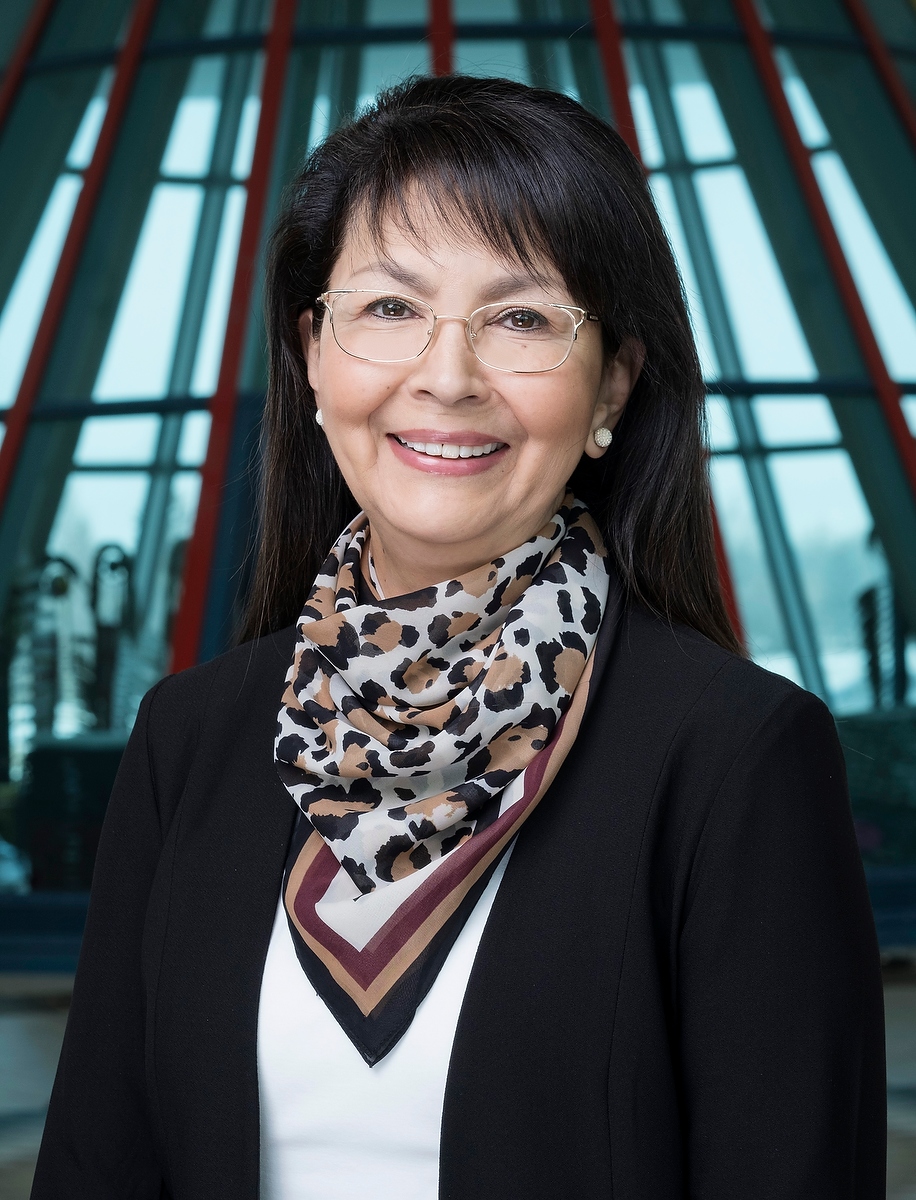
The October interviews feature members of the Academic Team: Dr. Marlene McNab, Assistant Professor and the Undergraduate Program Coordinator with Indigenous Social Work Program; and Dr. Merelda Fiddler-Potter, Assistant Professor, Indigenous Journalism & Communication Arts and Indigenous Business & Public Administration.
Through the interviews, we share some personal insights, a part of their life outside of academics.
Where are you from?
George Gordon First Nation, Treaty 4. I was born into that community and attended the residential school there. I obtained my undergraduate degree at SIFC in Saskatoon and then went to work for my community for 15 years, specializing in community-based mental health therapy.
What is something we don’t know about you?
Shortly after completing my dissertation I was approached by the U of R Press and asked if I was willing to adapt my dissertation to manuscript-form. I accepted this offer and went through the application process. My intent is to complete the adaptation in October 2026.
What is your area of study?
I have been a clinical social worker most of my career and what interests me most as a clinical researcher is studying trauma recovery models. Many of my research interests have been on the shelf for months due to my current work schedule.
What do you research? Do you publish or have books (and do you want to talk about your publications?)
Currently, we are waiting on research ethics approval for a research project, titled, “The Field Placement Experiences of Indigenous Social Work Students.” With the adaption of my dissertation to book-form underway, I am kept busy with the PC position and teaching five classes.
What are you most proud of?
I am really proud of the life that my husband and I have cultivated. I am really proud of the values that we’ve learned as a couple from his parents, especially my late father-in-law. His parents are nakawē (Saulteaux) and mine are nêhiýaw (Cree). I feel that we got it. We walk the talk.
Do you have a 5-year plan? What does it include?
For one, when I think about “retirement,” I can’t help but feel it’s a Western concept that is not in my consciousness. But I have been giving my future a lot of thought. What I hope to capture more of is the feeling I get when I’m teaching this master’s class I truly enjoy—it’s called Individual Counselling, where I draw from decades of clinical experience, Indigenous methodologies, and Western healing modalities. It’s where students are not just learning but are also healing. I want to do that on a bigger scale and right now I don’t know what that looks like.

Where are you from?
I was born and raised in Meadow Lake, Saskatchewan in a town my family founded. My family is both Cree and Métis. After the 1885 Resistance, our Cree and Métis families were in Jackfish Lake, not far from North Battleford. When Waterhen was being created, my great, great grandfather was not there when they moved everyone to Waterhen and so our family ended up in Meadow Lake, connecting with the Métis Morin family, who were Cree and Dene, and already living in the community.
What is something we don’t know about you?
My husband and both kids are celiac, so I taught myself to cook and bake completely gluten free. I also converted all of my mother and grandmother’s recipes to be GF. I love baking and I have spent the last few years perfecting gluten-free recipes. I just remember big, full kitchens of people cooking, baking, and making bannock. At Christmas time we make gluten-free baking and give the money to an animal charity.
What is your area of study?
I have a few. I was a journalist for 17 years, and a sessional since 2000. I left media in 2015 when I had my son and I was recruited to do a Public Policy PhD at Johnson Shoyama. My areas of focus are wide-ranging: public policy, public administration, journalism, narrative, communications, and business administration. They may not seem like they are connected, but they are. And I love the research I do.
What do you research? Do you publish or have books (and do you want to talk about your publications?)
I have a piece coming out in the Canadian Journal of Communication about trauma-informed journalism in Indigenous communities. I do a lot of work on Indigenous identities, especially complicated origins. I won a research grant to look into how Indigenous worldviews and how they can be incorporated with Western Journalism to create trust. And I’ve been published as a contributor in a number of books and publications.
What are you most proud of?
Modeling this idea that women can still achieve things after having kids. My family comes first always (and in all ways), but I also accomplish so much else. Women have so much to contribute to the Academy and other elite knowledge spaces. Finding the balance is so important for me to model to my children and others.
Do you have a 5-year plan? What does it include?
I don’t know exactly what the next 5 years hold. I’ve pitched some book ideas. The Indigenous Journalism program is brand new, and I know I’ll be working hard to see it expand. I would also love to see the trauma-informed research turned into a toolkit or modules to help early career journalists. And of course, the launch of our new Indigenous Business Communications Certificate. I have a busy 5 years ahead.

For campus locations, maps and hours of operation, please visit our contact us page.
 (the good path through life)
(the good path through life)
(the good path through life)